
Some losses are surprisingly difficult to explain.
Not the big losses. Not the important ones.
The small ones.
The things that never belonged to us in the first place.
A month ago, my parents and I attended an estate sale in the heart of Brenham, Texas—a town founded in 1844 and filled with the kind of history that lingers quietly in old homes and tree-lined streets.
The house itself intrigued us before we ever stepped inside.
The owner had passed away, and the family had left the home untouched for nearly twenty-five years. The contents remained just as they had been. It felt less like attending an estate sale and more like stepping into a preserved moment in time.
As with most sales, the estate company posted photographs in advance.
And as I scrolled through them, one image stopped me immediately.
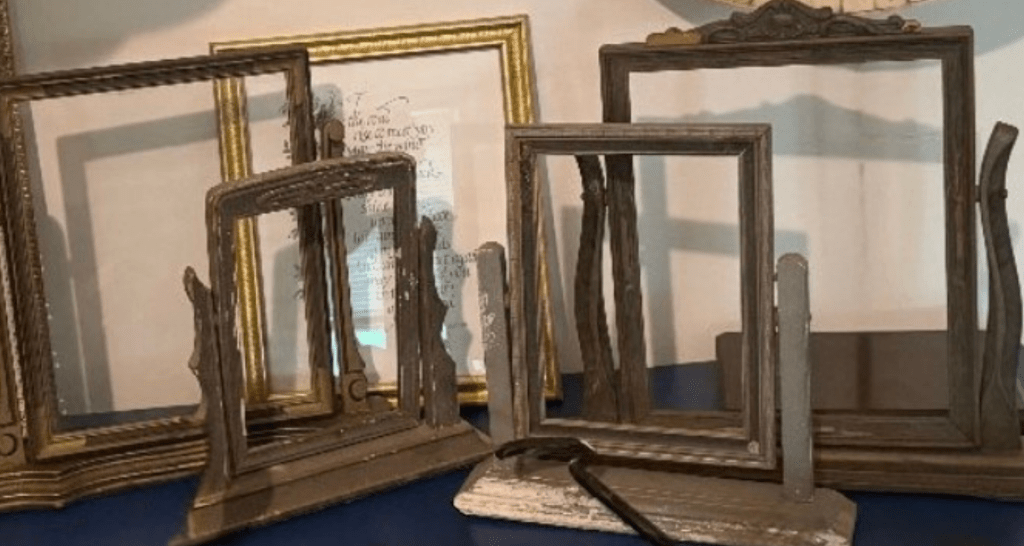
A collection of old wooden frames.
Simple. Handmade-looking. Worn by time.
The kind of frames often made between the late 1800s and early 1900s. The kind that sit on little stands rather than hang on walls.
To anyone else, they might have looked ordinary.
To me, they were perfect.
I could already imagine them scattered throughout our farmhouse holding antique rose prints, family photographs, and gathered memories.
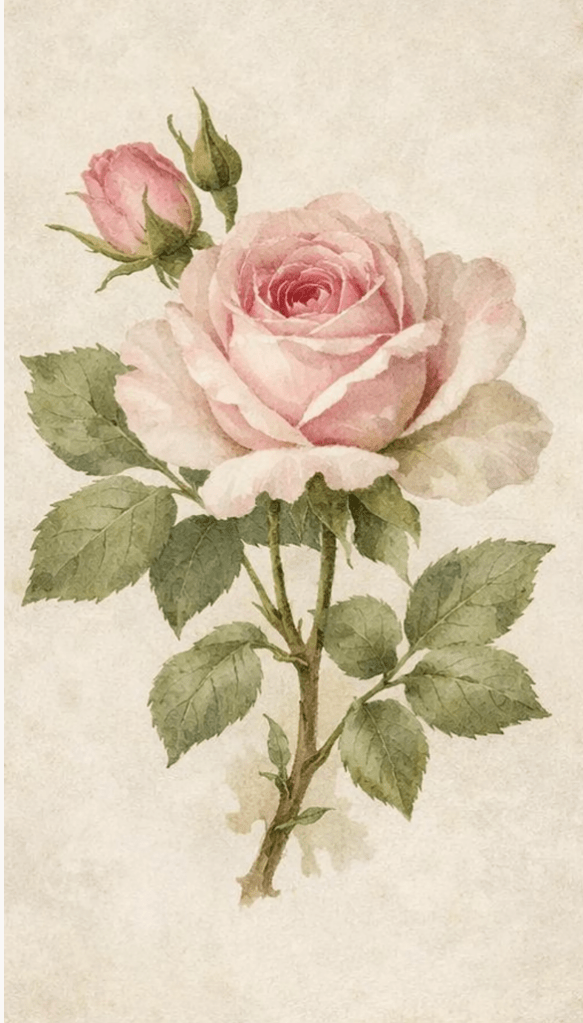
I fell completely in love with them.
So much so that my parents already knew our mission before we arrived.
Finding the frames became our strategy.
We arrived two hours before the sale opened.
Even then, we were numbers forty-one and forty-two in line.
Apparently, some shoppers had arrived three hours earlier.
As we stood waiting, we planned our attack.
My mother would head upstairs.
My father would search the living room.
I would go straight to the dining room.
Surely one of us would find them.
The doors opened.
We scattered.
And within minutes we knew.
They were gone.
Nothing.
Not one frame.
Not a single trace.
Someone had found them first.
I told myself it was silly to be disappointed.
After all, they were only frames.
But anyone who loves old things understands they were never just frames.
They were possibility.
For weeks afterward, I found myself thinking about them.
Wondering who bought them.
Wondering where they went.
Wondering whether someone loved them as much as I did.
And perhaps most of all, wondering where they would have lived in our home.
Because there was already a place waiting for them.
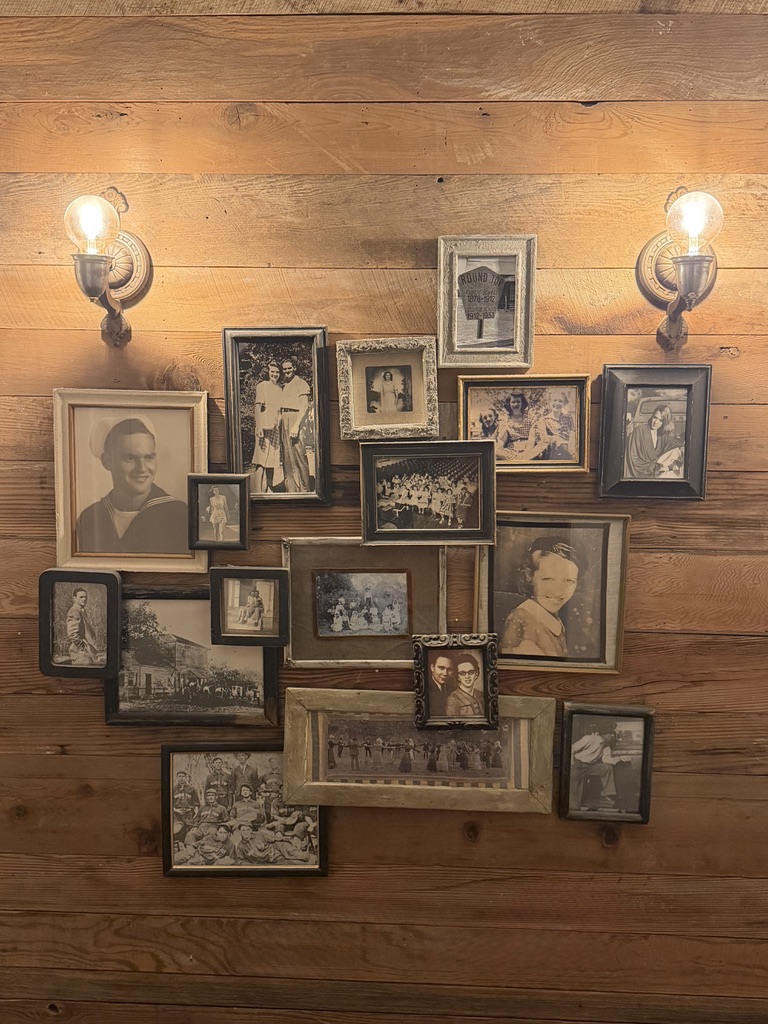
This wall lives in our cottage today and will soon move into the farmhouse with us.
Every frame holds a piece of family history, local history, or a story we wanted to preserve.
Looking at it now, I can still see exactly where those estate-sale frames would have gone.
Not because they matched.
Not because they were valuable.
But because they carried the same feeling.
The same quiet history.
The same evidence of hands, homes, and lives that came before ours.
The truth is, collecting isn’t really about acquiring things.
It’s about connection.
Sometimes an object comes home with us.
Sometimes it doesn’t.
Sometimes the pieces meant for us find their way into our lives.
And sometimes they become part of a different story entirely.
Still, I hope whoever found those frames that morning treasures them.
I hope they were taken home by someone who saw exactly what I saw.
And if not, that’s alright too.
There will be other estate sales.
Other treasures.
Other unexpected discoveries waiting behind old doors.
We learned a valuable lesson that day.
Bring a lawn chair.
Bring a book.
Arrive before sunrise.
And never underestimate how many people are searching for the exact same thing you love.
Because sometimes the pieces that get away leave a mark of their own.
And sometimes the stories we remember most are the ones we never got to bring home.


Share you thoughts